
I. Introduction
The right to participate in politics exists, at least formally, in many countries. But the reality of that participation varies widely. Elections can be held without being competitive. Civil society organizations can exist without being free. Media can operate without being independent. The gap between political institutions on paper and political institutions in practice is one of the most important distinctions in comparative politics. This gap becomes even wider when the United States and Russia are compared.
This post compares how civil society and citizen participation function across these two political systems, one democratic and one authoritarian. It examines three institutional areas: elections and party competition, civil society organizations, and media regulation — to show how regime type shapes not just whether citizens can participate, but whether that participation carries any real weight. The central argument is straightforward: civil society and citizen participation are far more open and politically meaningful in the United States, while in Russia they are systematically curated by state control, legal repression, and the concentration of power in the executive.
II. Conceptual Framework
Four concepts form this analysis. The first is civil society, which refers to the range of organizations and groups that exist outside the direct control of the state.1 These organizations serve as intermediaries between citizens and government, giving people structured ways to express opinions, organize collectively, and influence public policy. A functioning civil society is generally understood as a precondition for democratic legitimacy. The second is citizen participation, which describes the different ways individuals attempt to influence political decisions. Participation encompasses voting, campaigning, protesting, petitioning, and engaging with public institutions. But participation is only meaningful when those actions can actually affect outcomes.
The third concept is regime type, which refers to how political power is organized and exercised in a given state.2 Regime type is not fixed. One of the most significant political processes of the past two decades has been autocratization — sometimes called democratic backsliding — in which formally democratic systems gradually become less open as leaders weaken independent institutions, restrict opposition, and consolidate executive power. Russia's trajectory over the past three decades is a clear illustration of this process. The fourth concept is media regulation, which describes the legal and structural controls that govern how information is produced and distributed. When media is state-controlled, it narrows the range of permissible political discourse and actively suppresses civil society voices before they can gain public traction.
Methodologically, this essay uses the Most-Different Systems Design (MDSD), which compares countries that differ significantly in their background conditions in order to isolate the effect of specific institutional variables.3 The United States and Russia differ in history, geography, culture, and economic structure. By holding those differences in view and focusing on political institutions, this comparison demonstrates that institutional design — not culture or circumstance — is the primary driver of how open or restricted political participation actually is.
III. Comparative Analysis
A. Elections and Political Competition
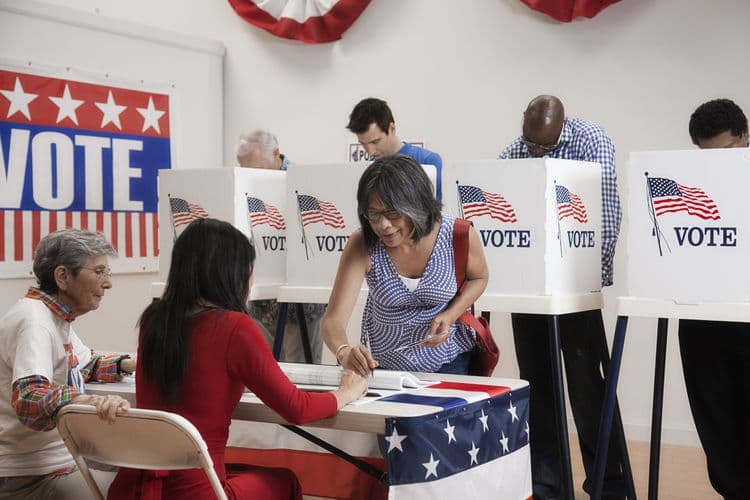
In the United States, elections at all levels involve genuine competition. Political parties, independent candidates, and civic organizations can organize, campaign, and contest for office without state interference. Citizens can use formal electoral channels alongside informal ones — joining advocacy groups, donating to campaigns, engaging in public debate — in ways that translate into real policy influence. As the Bush Institute observes, Americans can exercise voice through a wide range of civic organizations, and the country benefits from a structural foundation that includes an independent judiciary, a free press, and an active civil society sector.4 Freedom House similarly notes the presence of "strong structural safeguards" and a "vigorous press" that allow citizens to challenge power and seek accountability.5 There are genuine concerns about campaign finance, ballot access, and the influence of money in politics — but the institutional framework still permits meaningful opposition and political contestation.
Russia presents a fundamentally different picture. While elections formally exist, they operate within a system designed to produce predetermined outcomes rather than genuine competition. Freedom House describes Russian political power as concentrated in the presidency and sustained by a controlled media environment and a systematically weakened opposition.6 The United Nations has characterized key Russian laws as "systematic tools of political repression," directly limiting who can run for office, organize politically, or challenge existing power structures.7 In this context, elections function less as a mechanism of citizen choice and more as a ritual of legitimation for existing authority.
B. Civil Society Organizations
In the United States, thousands of independent organizations operate across every policy domain — from environmental advocacy to criminal justice reform to immigrant rights — and these organizations regularly influence legislation, litigation, and public opinion. Their independence from state control is legally protected and institutionally reinforced. Even during periods of political polarization or executive overreach, civil society organizations have proven capable of mounting legal challenges, mobilizing public pressure, and sustaining opposition movements over time.
In Russia, civil society is not merely limited — it is actively dismantled. The United Nations has documented how Russian government policy systematically targets independent organizations, particularly those with international ties or oppositional orientations.8 Organizations can be labeled "foreign agents" under broadly worded legislation, subjecting them to onerous reporting requirements, public stigma, and eventual closure. The space for organized independent political action outside the government has been progressively narrowed to the point of near-elimination.
C. Media Regulation and Information Access
In the United States, constitutional protections for press freedom create a legal foundation for independent journalism. Citizens have access to a wide range of viewpoints — including those sharply critical of the government — and media organizations can investigate and publish without prior restraint. This environment is not without problems: media consolidation, partisan polarization, and the economic fragility of local journalism are all serious concerns. But the structural independence of the press from direct state control remains intact.
In Russia, Human Rights Watch has documented a comprehensive government strategy of "control and increasing isolation" that deploys an "entire arsenal of tools" to regulate communication — including internet censorship, restrictions on virtual private networks, criminal liability for unauthorized speech, and the forced closure of independent outlets.9 These measures do not merely limit what citizens can say; they shape what citizens can know.
D. The Data
Quantitative evidence reinforces this qualitative picture. The Civil Society Participation Index, produced by V-Dem and visualized through Our World in Data, measures the degree to which citizens actively engage in diverse civic organizations and whether those organizations have meaningful influence over policymakers.10 On a scale of 0 to 1, with higher scores indicating greater participation and influence, the United States scores 0.96 in 2025 — among the highest in the world. Russia scores 0.20, placing it in the range of highly restricted authoritarian systems. This gap of nearly 0.76 points is not a marginal difference; it reflects a categorical distinction in how political systems relate to their citizens.
IV. Who Gets Left Out
No comparison of this kind is complete without attending to exclusion — the question of who, even within nominally open systems, is effectively denied meaningful participation. In the United States, exclusion operates largely through indirect mechanisms: income inequality, unequal access to the ballot, the disproportionate influence of wealthy donors in campaign finance, and the persistence of structural barriers that fall hardest on Black, Indigenous, and Latino communities. Freedom House notes that while legal protections for political rights formally exist, they are not always enforced equally.11 Citizens are not formally barred from participating, but many face practical obstacles — from restrictive voter ID laws to polling place closures — that make engagement significantly harder in practice.
In Russia, exclusion is structural rather than incidental. It is written into law and enforced by the state. Independent voices are silenced not by market forces or social inequality but by criminal prosecution, forced exile, and the systematic elimination of the organizations through which dissent might otherwise be channeled. The most politically active segments of Russian civil society — journalists, opposition politicians, human rights lawyers — face arrest, asset seizure, or worse. This is not a failure of the system to live up to its ideals; it is the system functioning as designed.
V. Conclusion
The comparison between the United States and Russia demonstrates that the formal existence of elections, political parties, and civil society organizations tells us very little about whether citizens can actually participate in politics in a meaningful way. What matters is the environment in which those institutions operate: whether people are free to organize, to speak, to access independent information, and to challenge those who hold power.
In the United States, that environment — imperfect and unequal as it is — still preserves the structural conditions for genuine political contestation. Citizens can join organizations, vote in competitive elections, protest, litigate, and access a press that operates independently of state control. These mechanisms do not always work as intended, and they do not serve all citizens equally. But they remain available, and they remain meaningful.
In Russia, those conditions have been progressively eliminated. Independent media has been shuttered or absorbed. Civil society organizations have been labeled enemies of the state. Opposition politicians have been jailed or forced into exile. The institutions of participation exist on paper, but the space in which participation could be free has been closed.
The lesson is not that democracy is easy or that the United States has solved the problem of political inclusion. The lesson is that the institutional conditions under which citizens engage with power are the difference between participation that matters and participation that is merely performed.
Citations
Footnotes
See generally Robert D. Putnam, Bowling Alone: The Collapse and Revival of American Community (Simon & Schuster 2000).
Steven Levitsky & Lucan Way, Competitive Authoritarianism: Hybrid Regimes After the Cold War (Cambridge University Press 2010).
Arend Lijphart, Comparative Politics and the Comparative Method, 65 Am. Pol. Sci. Rev. 682, 685–86 (1971).
George W. Bush Institute, Freedom in the World: The Annual Survey of Political Rights and Civil Liberties (2024).
Freedom House, Freedom in the World 2025: United States (2025).
Freedom House, Freedom in the World 2025: Russia (2025).
U.N. Human Rights Council, Report of the Special Rapporteur on the Rights to Freedom of Peaceful Assembly and of Association: Russia (2023).
Id.
Human Rights Watch, Russia: Events of 2024 (2025).
V-Dem Institute, Civil Society Participation Index, in Our World in Data (2025).
Freedom House, supra note 5.